

Share
Retail captured 42% of Australia's $31.3 billion in commercial property deals last financial year, with private capital the top buyer and regional centres in demand.
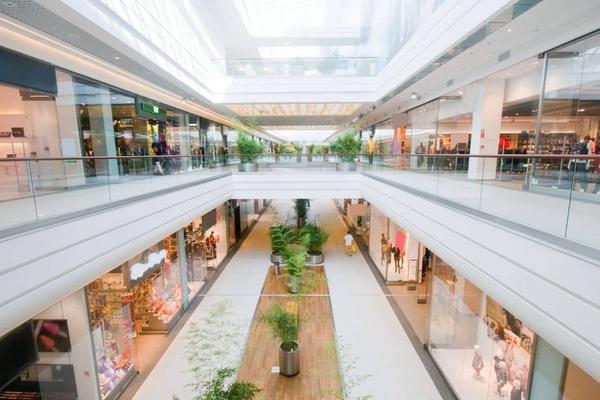
Retail property was the standout performer in Australian commercial property last financial year, with approximately $13 billion of transactions, according to JLL Research. That gave retail 42% of the $31.3 billion total, ahead of office and industrial, for the second consecutive year. Shopping centres drew the strongest interest, with private capital the largest buyer.
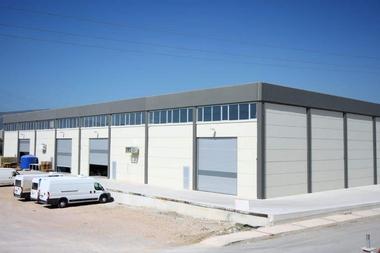
For the second consecutive year, the retail sector has outperformed all other major commercial property categories. The office sector contributed $9.6 billion, while industrial property accounted for approximately $8.7 billion.
| Sector | Transactions |
|---|---|
| Retail | approximately $13 billion (42% of the total) |
| Office | $9.6 billion |
| Industrial | approximately $8.7 billion |
| All commercial property | $31.3 billion |
Private capital outbids the institutions
Shopping centres have become particularly attractive to investors, driven by consistent population growth and strong competition among different buyer groups. Private capital made a significant push into the market, often outbidding institutional investors and syndicates to become the top acquirer on a dollar basis, with private capital acquisitions totalling $4.3 billion of retail deals.
Private capital covers wealthy individuals, family offices and private investment groups, as opposed to super funds and listed property trusts. Its share of retail deals shows the sector’s appeal reaches well beyond traditional institutional buyers.
The market saw 29 deals exceed $100 million and 13 transactions close for more than $300 million, leading to a 66% jump in average deal size to $124 million.
JLL retail investments head for Australia and New Zealand, Sam Hatcher, said demand for retail assets remained strong across the board.
“Demand for retail assets was unwavering, with bidder depth exceeding historical averages,” Mr Hatcher said.
Regional shopping centres dominate
Regional shopping centres dominated transaction activity, making up 43% of deals and totalling $5.6 billion in transactions. Yields on regional shopping centres also tightened to an average of 5.8%, reflecting increased investor confidence in the sector.
A yield is the property’s annual income as a percentage of its price. When yields tighten, or compress, buyers are paying more for each dollar of rent, which usually signals confidence in the income holding up.
Partial-interest sales grow in popularity
Partial-interest sales grew in popularity throughout the year, with several major transactions demonstrating this trend:
- GPT Group spent $1.2 billion acquiring a half-stake in both Sunshine Plaza in Queensland and Macarthur Square in New South Wales from Lendlease.
- QIC and ART purchased 19.9% of Westfield Sydney for $863 million.
- JY Group acquired half of Westfield Marion for $670 million.
Selling a share rather than a whole centre lets owners release capital while keeping an interest, and lets buyers take a position in large assets without funding the full price.
The outlook for retail property
JLL expects demand to remain robust in the new financial year, supported by limited supply and a growing number of international players seeking retail assets on Australian shores.
The strong performance of retail property comes as the sector continues to show resilience despite broader economic challenges. Mr Hatcher said the outlook for retail property investment remains positive as competition for quality assets intensifies.
Retail’s run hasn’t been limited to the major centres. Our reports on large format retail as an investment option and luxury retail driving the Sydney CBD revival cover other parts of the sector, and capital city retail and office performance compares the two.
What it means for smaller commercial investors
Most investors won’t be bidding on a regional shopping centre. The same drivers, population growth, limited new supply and steady demand for everyday retail, also support smaller assets such as neighbourhood shops, strip retail and large format units.
If you’re considering a retail property, look at:
- the tenant’s business and lease length, as retail income depends on the tenant trading well
- whether the tenant mix serves everyday needs such as food, health and services
- rent reviews and who pays outgoings
- foot traffic, parking and nearby population growth
- vacancy risk if the tenant leaves, and how long similar shops take to re-lease
Lenders weigh the same points. They’ll assess the lease, the tenant’s strength, the property’s location and your own financial position, and loan-to-value ratios for commercial property are usually lower than for homes. A broker can compare commercial property loans for retail investments across a range of lenders. Attain Loans is a mortgage and commercial finance broker in Melbourne’s west working with property investors, subject to each lender’s assessment.
This article is general information only and doesn’t take into account your objectives, financial situation or needs. Consider whether it’s appropriate for you and speak with a licensed professional before making a decision.
Further questions
How much retail property was sold in Australia last financial year?
Why are investors buying shopping centres?
What is a partial-interest sale?
Can smaller investors invest in retail property?
Are retail property yields higher than office and industrial?
This is general information only and is subject to change at any given time. Your complete financial situation will need to be assessed before acceptance of any proposal or product.