

Share
Rising rents, limited new supply and defence, energy and resource projects are drawing national investors to Darwin's commercial market. Prime industrial rents are up sharply.
Darwin’s commercial property market is firming, with rents and prices lifting across most sectors and some values above the previous cycle peak. Prime industrial rents have risen from roughly $130–$150 to $170–$200 per square metre in two years, new supply is limited and national investors are taking notice as defence, energy and resource projects take shape.
Darwin’s commercial property sector is strengthening, with rising rents, limited new supply and increasing investor demand as defence, energy and resource projects signal future growth potential.
According to LJ Hooker Commercial Darwin director Lee Doyle, the market is experiencing steady strengthening rather than volatility, underpinned by limited new supply and improving confidence across the Top End.
While the market is not yet in boom territory, conditions are firming with prices and rents lifting across most commercial sectors. In some parts of the market, values are already sitting above the previous cycle peak.
Feasibility is holding back new supply
“The biggest handbrake to Darwin’s commercial sector is feasibility, with construction costs and end values not yet aligned enough to trigger a broad wave of new development,” Mr Doyle said.
However, he said the gap is narrowing, and the real pivot point will come if flagged defence, oil, gas and mining projects translate into sustained employment and population growth.
“If proposed projects in defence, oil and gas, mining and major projects show up as real jobs, real demand and more people on the ground, then the current supply will tighten quite quickly,” he said.
Population growth is picking up
Population data suggests momentum is already building. The latest Australian Bureau of Statistics figures show Darwin’s population grew 1.7% in 2024–25, up from 1.5% the year before, making it the only capital city to record faster growth than the previous year.
That steady population lift, combined with a solid labour market and emerging demand from new asset classes such as data centres and hotel repositioning, is helping underpin confidence in the sector. Data centres are a growing asset class nationally, as our report on Australia’s data centre market shows.
Darwin commercial property by sector
| Sector | Conditions | Rents |
|---|---|---|
| Prime industrial | Strong demand, tight supply in Berrimah, Pinelands and East Arm | From roughly $130–$150/sqm two years ago to $170–$200/sqm |
| A-grade office | Holding up strongly, low incentives | $700–$750/sqm, steady |
| B- and C-grade office | Softer demand as tenants trade up | Not reported |
| Retail | Subdued but stable, tenant mix shifting to medical and services | Not reported |
Industrial
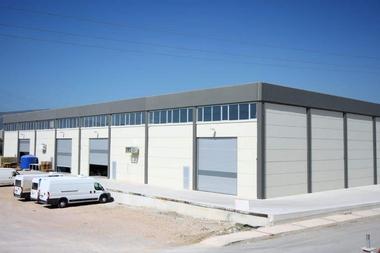
Strong demand and tight supply across precincts such as Berrimah, Pinelands and East Arm have pushed prime industrial rents from roughly $130–$150 per square metre two years ago to between $170 and $200 today. Higher-quality assets are attracting the most competition, with further upside expected if project activity flows through.
Office
The office market is increasingly split in two. Modern A-grade stock is holding up strongly, with prime rents steady at $700–$750 per square metre and incentives remaining low. Older B-grade and C-grade offices are facing softer demand as tenants trade up into better-quality space.
Retail
Retail is more subdued but stable. Suburban centres and strip locations continue to perform reasonably well, though the tenant mix is shifting. Medical, healthcare, wellness and service-based operators are steadily replacing traditional discretionary retail tenants.
National investors look north
LJ Hooker Commercial head of research Mathew Tiller said Darwin is increasingly on the radar for national investors who are searching beyond the eastern capitals for yield and growth opportunities.
Darwin also stands to benefit from broader national spending themes, particularly defence, energy, logistics and infrastructure, but the key variable remains execution.
“If those projects translate into sustained employment and population growth, pressure on an already constrained market is likely to intensify further,” Mr Tiller said.
What to weigh before buying commercial property in Darwin
The residential market is moving too. Our report on Darwin’s residential property market covers price growth and the projects behind it. For commercial investors, the same small scale that makes Darwin responsive to local jobs also means:
- fewer buyers when you want to sell, so expect a longer sale process
- tenant demand that depends on a handful of major projects
- a clear split between quality assets and older stock, as the office market shows
- lender policies that can be more conservative in smaller markets
Quality is driving returns nationally as well, as our article on commercial property returns explains.
A broker can compare commercial property loans from lenders that finance Northern Territory assets. Attain Loans is a mortgage and commercial finance broker in Melbourne’s west working with investors buying locally and interstate, subject to each lender’s assessment.
This article is general information only and doesn’t take into account your objectives, financial situation or needs. Consider whether it’s appropriate for you and speak with a licensed professional before making a decision.
Further questions
Is Darwin commercial property a good investment?
What are industrial rents in Darwin?
How is the Darwin office market performing?
Why isn't more commercial property being built in Darwin?
Can I finance a commercial property in Darwin from Melbourne?
This is general information only and is subject to change at any given time. Your complete financial situation will need to be assessed before acceptance of any proposal or product.